
In 2013, the Nobel Prize in Physiology or Medicine established the cellular “vesicle trafficking” mechanism—essentially the instruction manual for how cells package and deliver signals. That insight helps us understand and modulate exosome formation and release, opening possibilities in skin and aesthetic care. Exosomes have since been widely explored as one of the most promising ways to break long-standing bottlenecks in regeneration and repair.
TL;DR
-
Exosome = composite signal carrier: a lipid-bilayer vesicle that packages a signal set (proteins/peptides/lipids/nucleic-acid fragments).
-
Growth factor / peptide = single active: think of them as members of that broader signal set.
-
On our site, we focus on the cosmetic value of exosomes—soothing, hydration, and barrier support—and use freeze-dried + fresh reconstitution to align peak activity with the 0–60 min post-microneedling window.
01|Three definitions first
-
Peptides: short amino-acid chains; often used for hydration, comfort, or “signal-like” cues.
-
Growth factors: larger proteins that bind receptors and trigger downstream pathways; typically used in professional signal-driven contexts.
-
Exosomes: nano vesicles (≈30–150 nm) wrapped by a lipid bilayer, carrying proteins/peptides/lipids/miRNA fragments, and delivering a contextual signal mix to the target cell surface or local microenvironment.
One-liner: Peptides/GFs are “single notes.” Exosomes are the “arrangement + speaker.”
02|Why exosomes are
not
just a “growth-factor cocktail”
-
Structural shielding: the lipid bilayer works like a protective capsule against oxidation/enzymatic degradation—helpful for fragile proteins/peptides in topical settings.
-
Context matters: exosomes deliver coordinated, self-modulating signals (protein/peptide/lipid/nucleic-acid fragments) that better resemble natural cell-to-cell grammar, not a random platter.
-
Delivery & dwelling: vesicle–skin interactions help signals linger where needed without brute-forcing high concentrations.
-
Dose friendliness: synergy within a composite signal often allows more measured dosing, lowering the risk of “more is more” irritation from single molecules.
03|Single molecules vs. composite signals (side-by-side)
|
Dimension |
Peptides / Growth Factors (Single) |
Exosomes (Composite Vesicles) |
|
Composition |
One or a few actives |
Proteins/peptides/lipids/miRNA as a set |
|
Stability |
Prone to oxidation/enzymatic cut |
Bilayer protection; freeze-drying adds robustness |
|
Delivery |
Needs carriers/penetration tech |
Vesicle-mediated interaction with the stratum corneum/ECM |
|
Dosing |
Often driven by higher concentration |
Synergy allows more restrained dosing |
|
Perceptible path |
Point improvements |
Trends like Hydration↑ / TEWL↓ / Redness Index↓ / Elasticity↑ |
|
Best fit |
Daily functional serums |
Post-microneedling stabilization + daily comfort anchor |
04|How this maps to our products
-
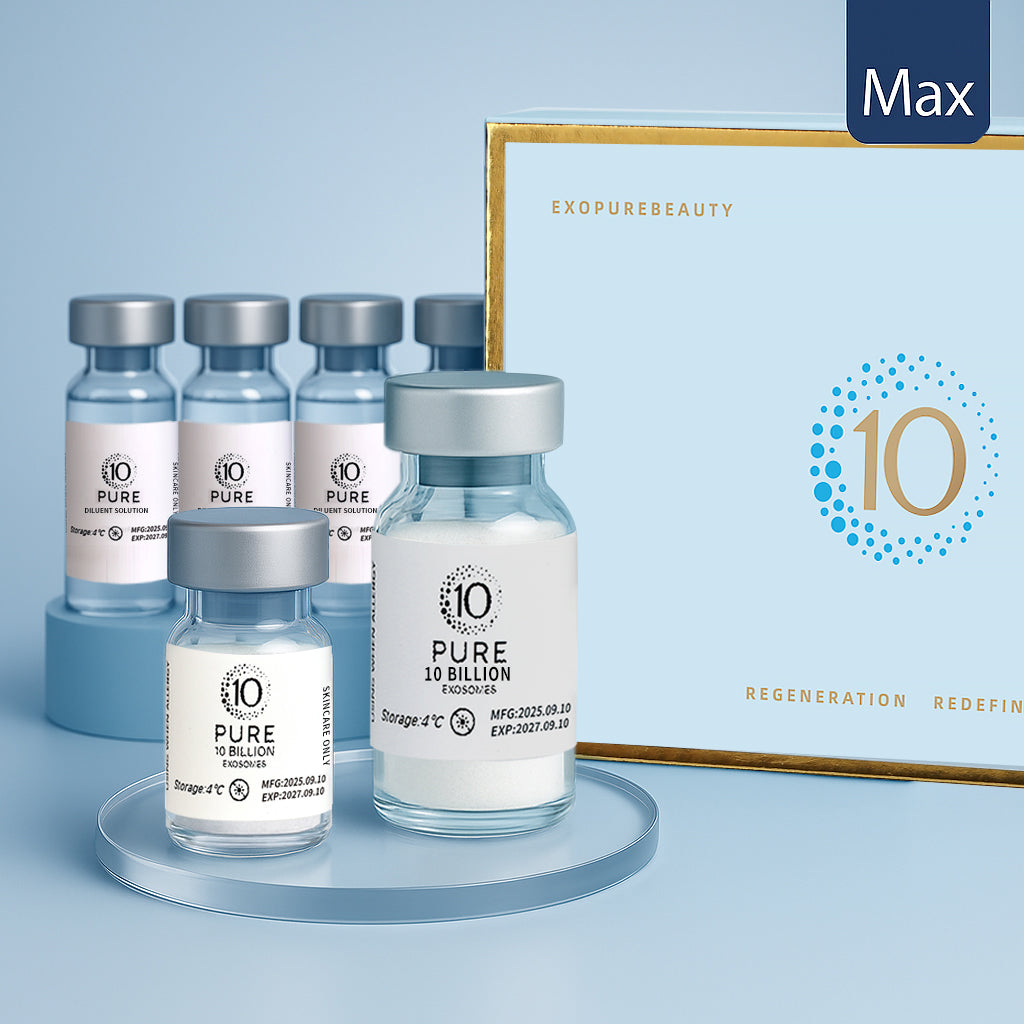
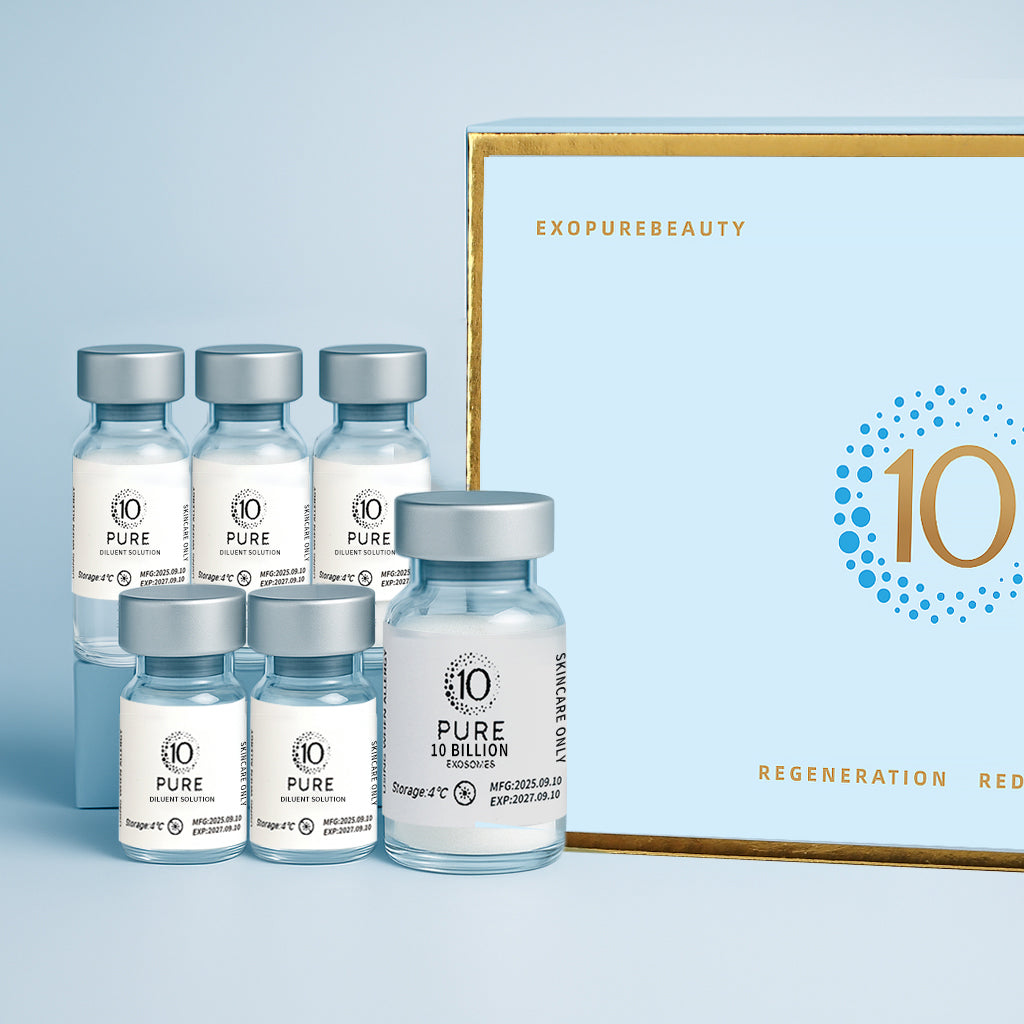
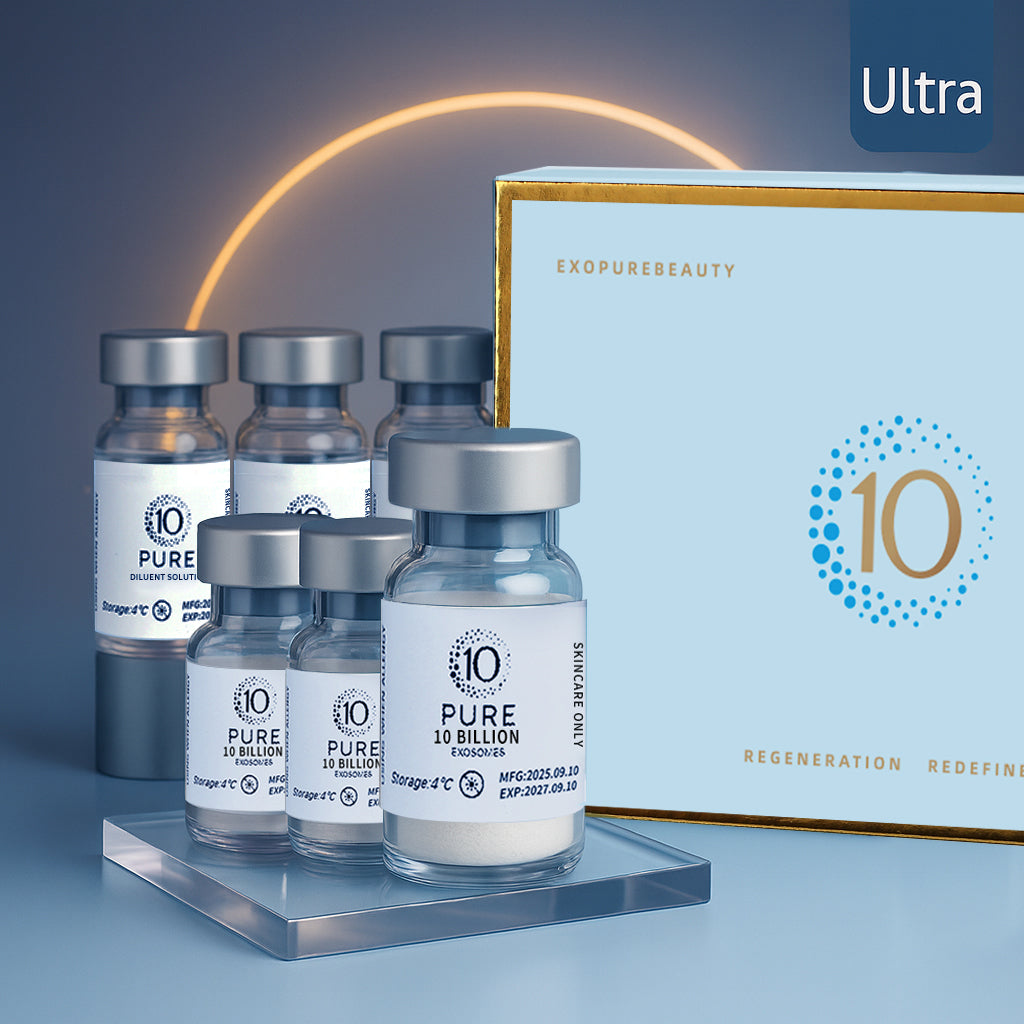
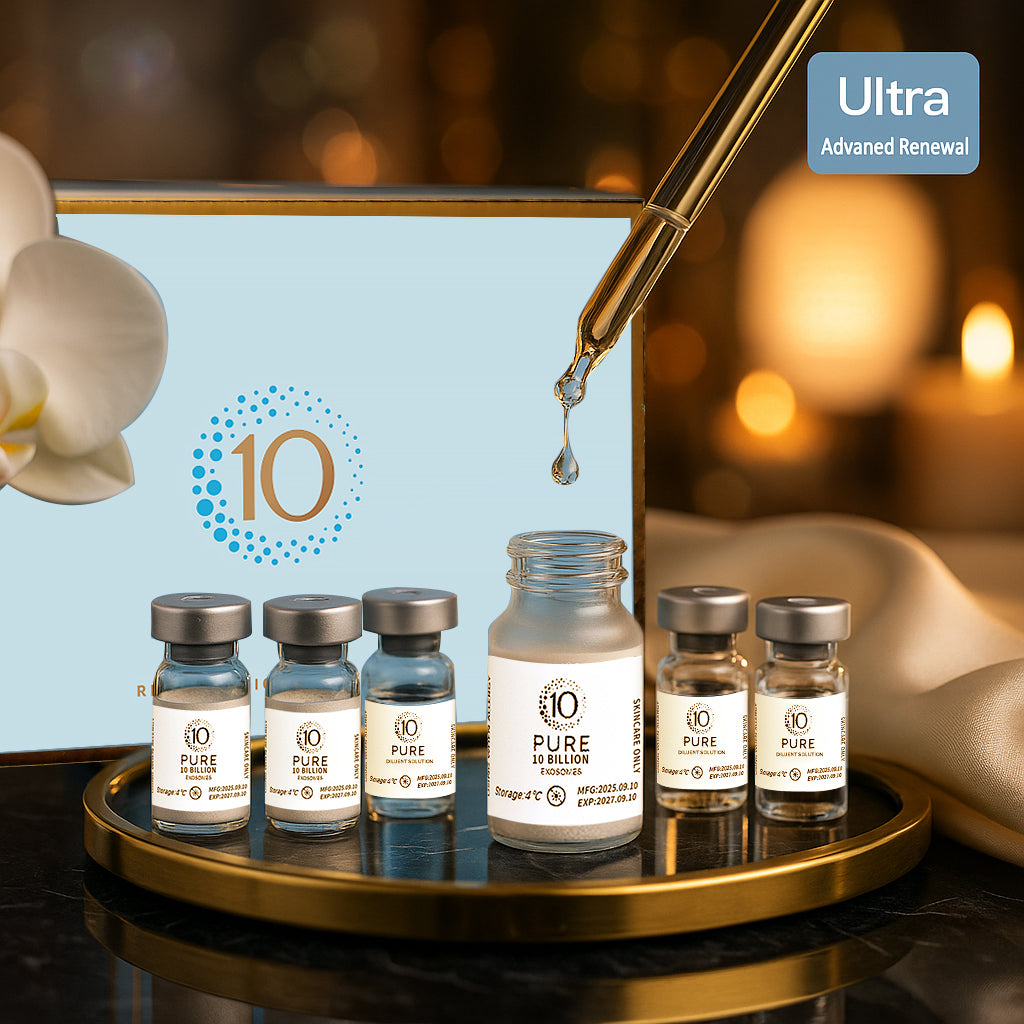
Format: EXO-Lyospheres™ freeze-dried exosome powder + dedicated diluent (dual-chamber freshness).
-
Why: freeze-drying preserves the composite signal; fresh reconstitution aligns the activity peak with the 0–60 min window after microneedling.
-
One vial = one use: standardized dose, hygienic loop.
-
Fresh-Batch 48h: ship within 48 h; allocate the latest released batch; print per-vial labels; QR to Trace Page (LOT/Vial-ID + batch COA summary).
Cadence options
-
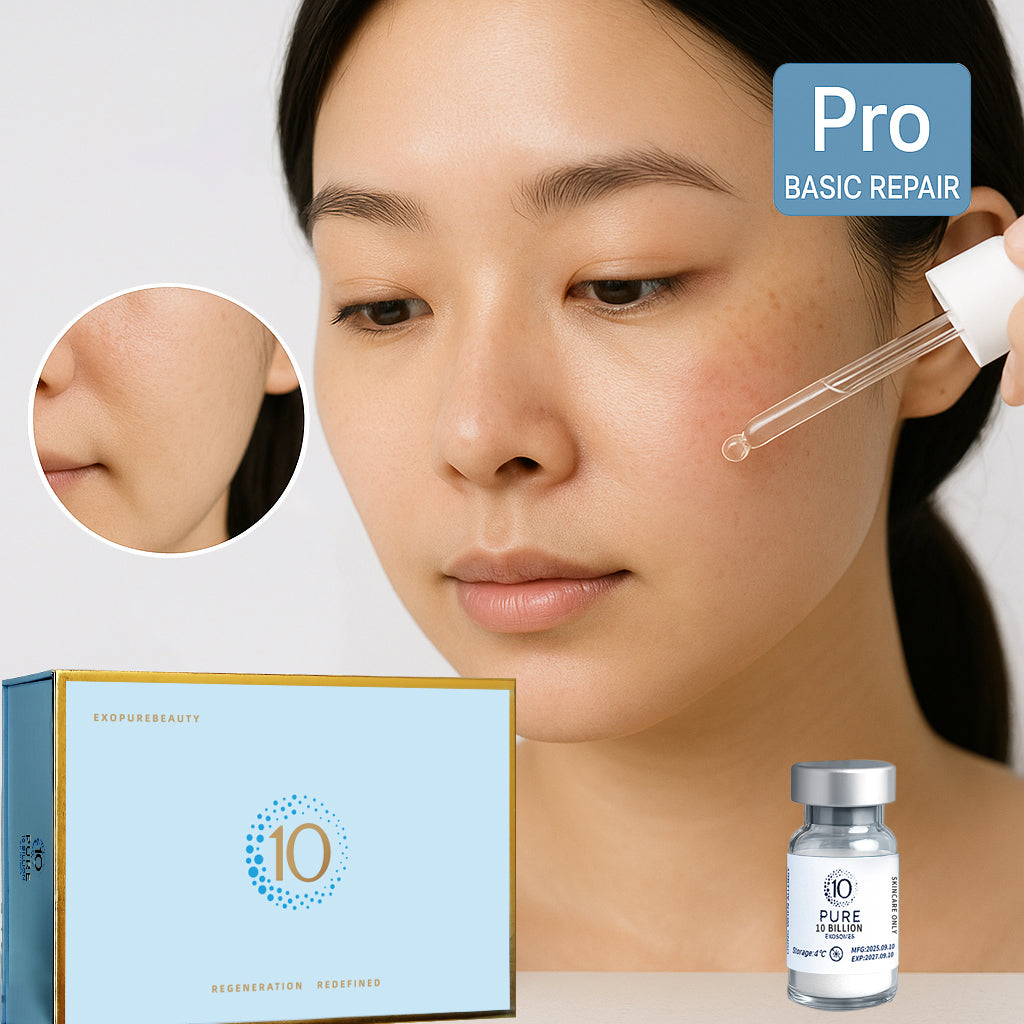
Pro (1+1): single session / first-time use.
-
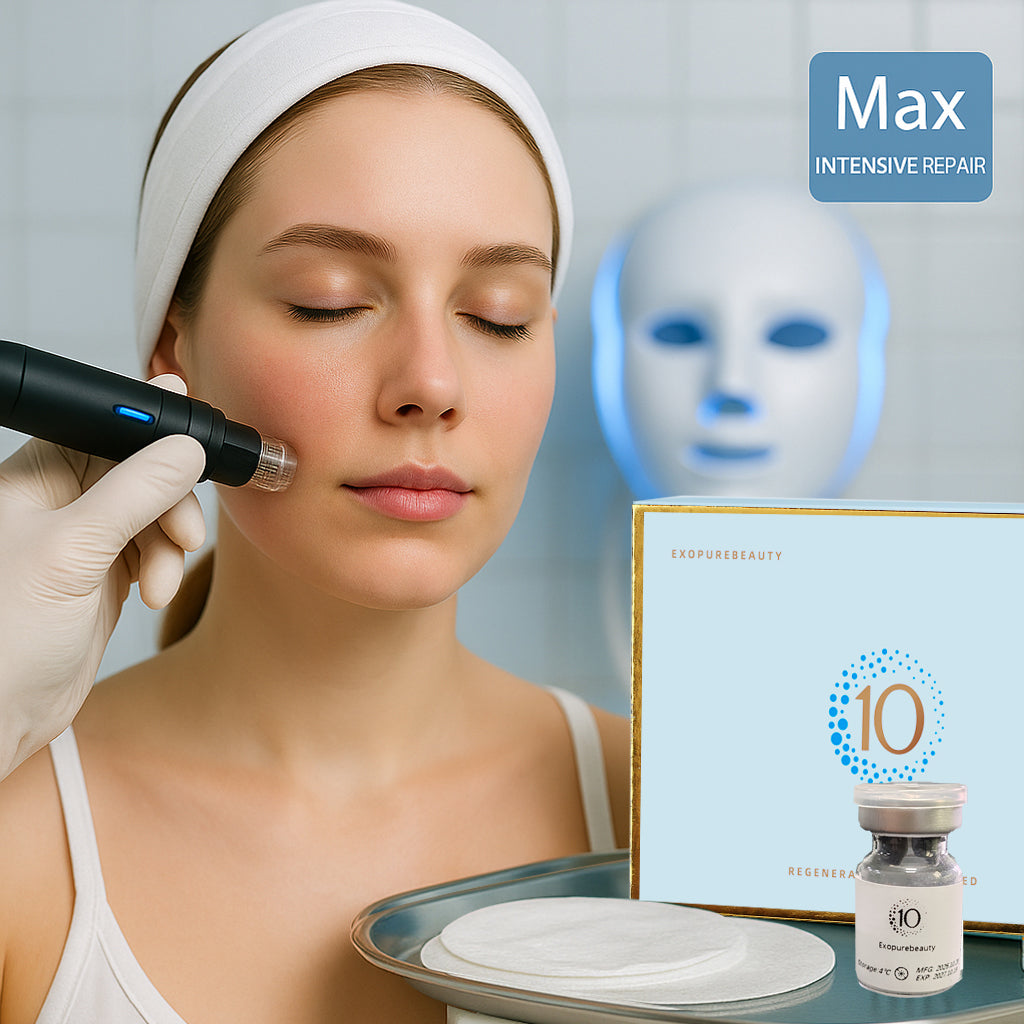
Max (2+2): two-week focused stabilization (D0 + D7–10).
-
Ultra (3+3): 3–4 week condensed rhythm (D0 + D7–10 + D20±)—stress-free before key events.
05|Why not stack “exosomes + a handful of GFs/peptides” bluntly?
-
Compatibility conflicts: different proteins/peptides favor different aqueous stability windows; crude stacking can make them undercut each other.
-
Dose ambiguity: topical care is not “the more the better”—overshooting single molecules can raise irritation odds.
-
Redundancy: exosomes already carry a broad signal spectrum; piling on may inflate cost with low marginal benefit.
Smarter approach: let exosomes play lead (stabilization + signal coordination); weave in supporting peptides (e.g., barrier/hydration peptides) from D3–D7 as tolerance allows.
06|Feeling vs. measuring: don’t only trust photos
Anchor the composite-signal story to four readouts (cosmetic context):
-
Hydration (Corneometer) ↑ → better makeup adherence;
-
TEWL ↓ → steadier barrier, less tightness;
-
Redness Index ↓ → fewer visible flare-ups;
-
Elasticity (Cutometer, e.g., R2/R7) ↑ → watch trendlines at 2–6 weeks.
We recommend simple logs at D0 / D3 / D7 / D14 / D28 to capture both immediate comfort and mid-term texture clarity.
07|Practical run-through (procedure day)
-
Reconstitute immediately after: add diluent along the vial wall; gently invert (avoid harsh shaking).
-
Apply full vial: dot by zones + light pressing.
-
Calm: 10–15-minute cooling sheet mask.
-
D1–D3: “less is more”—hydration + broad-spectrum/physical sunscreen.
-
D7–10: next session; 3 sessions ≈ one condensed cycle.
08|Quick Q&A
Q: So exosomes are just “lots of growth factors/peptides in a jar”?
A: No. Not a dump-in “buffet,” but a protected, organized composite closer to natural signaling.
Q: Can I layer my favorite peptide serum with exosomes?
A: Yes—stagger it. Keep exosomes as the hero on D0, then add gentle peptides D3–D7 as tolerance allows.
Q: Why do you keep insisting on freeze-drying?
A: To present the composite signal in a stable way and have the peak occur at the moment you use it—which is also why we run Fresh-Batch 48h.
One-line wrap
Growth factors/peptides are the “notes.” Exosomes are the “arrangement + speaker.” In the post-microneedling window, let the well-orchestrated composite signal land cleanly—so soothing, hydration, and barrier support feel more tangible and more measured.
Compliance & scope note (site-wide reusable)
Our products are cosmetics intended for surface-level skincare—hydration, soothing, and supporting the skin barrier. They are not intended to diagnose, treat, cure, or prevent any disease. Any research/case materials shared on-site are for educational context only and do not constitute individual performance guarantees or medical advice. Always follow professional guidance for in-clinic procedures and aftercare.
Read more
In 2013, the Nobel Prize in Physiology or Medicine established the cellular “vesicle trafficking” mechanism—essentially the instruction manual for how cells package and deliver signals. That insigh...
In 2013, the Nobel Prize in Physiology or Medicine established the cellular “vesicle trafficking” mechanism—essentially the instruction manual for how cells package and deliver signals. That insigh...