



Exosomes and Enlarged Pores: From "Pore Horror" to Pore Confidence
Excess oil, loss of elasticity, and pores that seem to get larger by the day—can exosomes really help? 1. The Four Truths Behind Enlarged Pores
Enlarged pores are perhaps the most misunderstood of all skin concerns. Many people believe their pores are large because they "haven't washed their face properly." As a result, they scrub aggressively with harsh soaps, scrubs, and deep cleansers—only to find their skin gets oilier and their pores become even more prominent.
In reality, the causes of enlarged pores are far more complex than simply "dirt." They generally fall into four distinct categories:
• Sebum Overload Type (Most Common): The sebaceous glands are highly active, causing a massive accumulation of sebum inside the pore, which physically stretches it open. This is most common in the T-zone and chin, and is often accompanied by blackheads.
• Aging and Laxity Type: As we age, collagen and elastin fibers in the dermis break down. The pores lose their structural support, gradually changing from a tight round shape to an elongated, drooping oval shape.
• Post-Inflammatory Type: Chronic inflammation from long-term acne or rosacea damages the tissue surrounding the pores, resulting in structurally enlarged and irregular pore openings.
• Dehydration Type: When the skin is severely dehydrated, the stratum corneum thins out, making pores visually more obvious. This is usually a temporary condition.
Different types of pore issues require completely different strategies. Using an oil-control product on aging/laxity pores is essentially useless.
2. The Limitations of Traditional Methods
Here is why common pore treatments often leave you disappointed:
• Deep Cleansing / Pore Strips: Physically extracting blackheads violently stretches the pore opening. It actually makes pores larger over time, and the blackheads return even faster.
• Oil-Control Toners: These provide temporary astringent effects, briefly tightening the appearance of the pore. However, they cannot change the actual output of the sebaceous glands—it is purely a surface-level fix.
• AHA / Salicylic Acid Exfoliation: These acids can soften keratin and improve blackheads, offering some help for sebum-type pores. But they cannot address the deep collagen loss associated with aging pores.
• Fractional Laser / RF: These devices stimulate collagen regeneration and tighten pores effectively, but they come with a high cost per session and a significant recovery period.
• Microneedling (Alone): While microneedling opens delivery channels and stimulates some collagen, its ability to regulate sebaceous gland secretion is limited without the right active ingredients. 3. How Do Exosomes Improve Pores Across Multiple Dimensions?
3.1 Regulating Sebaceous Glands at the Source
Exosomes carry signaling molecules that can modulate the activity of sebaceous gland cells, suppressing overactive sebum secretion. When oil production decreases at the source, less sebum accumulates inside the pore, preventing it from being stretched open.
3.2 Promoting Collagen Regeneration to Tighten Lax Pores
Growth factors like TGF-β and FGF carried by exosomes activate fibroblasts, promoting the synthesis of Type I and Type III collagen. This replenishes the lost structural support around aging, lax pores, helping them gradually transition from a drooping oval shape back to a firmer, rounder shape.
3.3 Anti-Inflammatory Repair for Post-Acne Pores
For enlarged pores left behind after acne breakouts, exosomes work by suppressing inflammatory responses and accelerating skin repair. This minimizes the progressive destruction of pore-surrounding tissue caused by repeated cycles of inflammation.
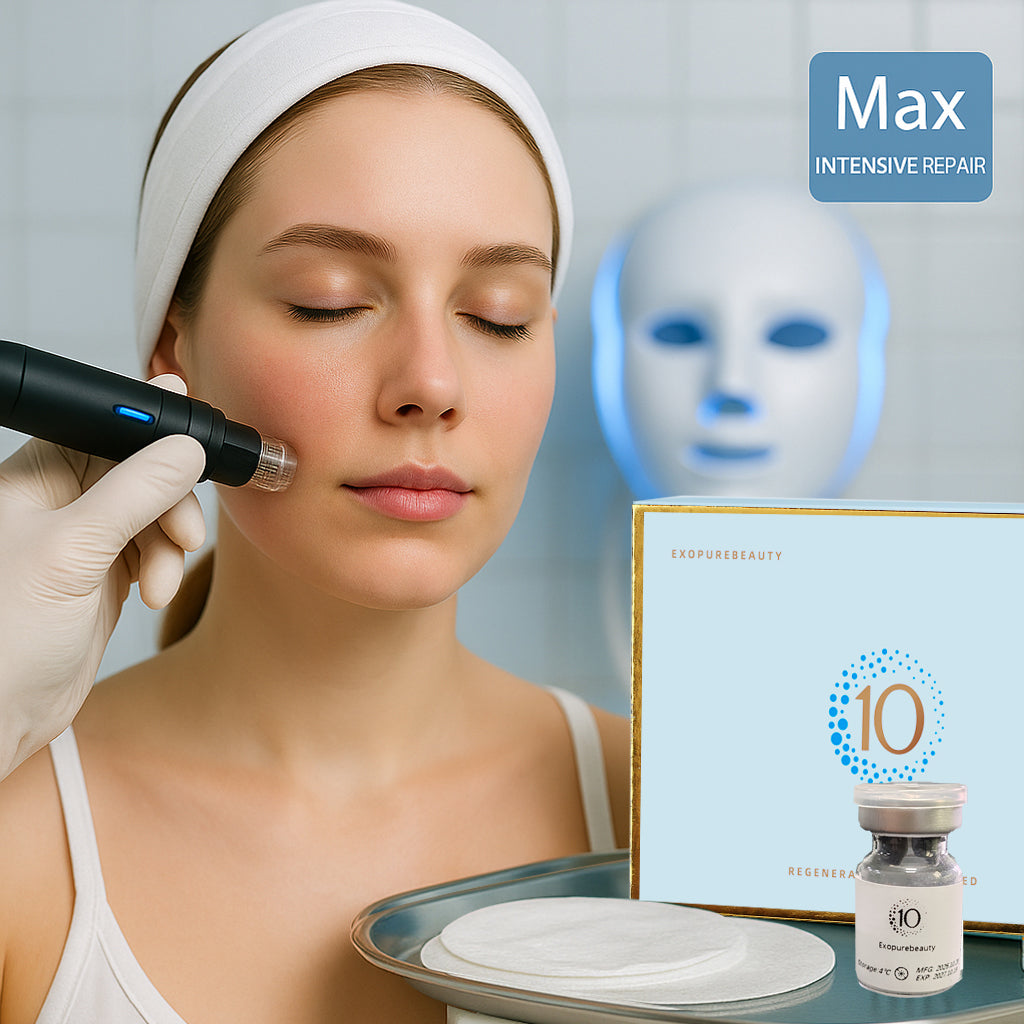
3.4 The Microneedling Synergy
Microneedling creates precise microchannels in the skin, allowing the active components of exosomes to penetrate directly into the dermis—a delivery method far superior to topical application. Together, they form a "golden combination" that regulates sebum while simultaneously stimulating collagen. 4. Identify Your Pore Type & The Exosome Solution
|
Pore Type |
Exosome Efficacy |
Recommended Protocol |
|
Sebum Overload (Oily, blackheads) |
★★★★☆ |
Exosomes + Microneedling + Oil-Control Serum |
|
Aging & Laxity (Oval, drooping) |
★★★★☆ |
Exosomes + Radiofrequency (RF) to stimulate collagen |
|
Post-Inflammatory (After acne) |
★★★★☆ |
Exosomes + Anti-Inflammatory Protocol (Control first, then repair) |
|
Dehydration (Temporary) |
★★★☆☆ |
Exosomes + Intensive Hydration (Barrier repair focus) |
 5. Real User Result Timeline
• Weeks 1-2: Overall skin oiliness decreases, T-zone greasiness lightens, and blackheads inside the pores begin to soften.
• Week 4: Pore openings slightly narrow, and the overall refinement and smoothness of the skin improve.
• Week 8: A visible tightening effect is seen on aging/laxity pores, with oval-shaped pores trending back toward round.
• Week 12: When combined with microneedling or RF, overall pore enlargement is significantly improved. 6. Daily Advice for Those with Enlarged Pores
• Stop using harsh soap-based cleansers: Over-cleansing destroys the lipid barrier, stimulating the sebaceous glands to produce even more oil. You will literally wash your face into becoming oilier.
• Wear sunscreen daily: UV radiation is the biggest culprit behind skin aging. Consistent sun protection is the first and most crucial step in preventing aging-type pore enlargement.
• Exfoliate regularly, but not excessively: Oily skin types can gently exfoliate 1-2 times a week. Dry or sensitive skin types should proceed with extreme caution.
• Choose serums with oil-control actives: Ingredients like Niacinamide and PCA Zinc can help regulate sebum production.
• Do not expect pores to completely disappear: Pores are a normal, essential anatomical structure of the skin. The goal of exosome therapy is to make them "visually invisible," not to physically erase them.
Exopurebeauty · Exosome Science · Let Your Skin Return to Its Natural Self
Read more

Stretch marks are deep dermal scars that ordinary creams can't reach. Discover how exosome therapy rebuilds broken collagen fibers and fades marks from within.

Stop buying eye creams that don't work. Dark circles are actually three different problems. Discover how exosome therapy targets pigmentation, vascular pooling, and volume loss simultaneously.