




Exosomes and Hair Loss: A Smarter Approach to Follicle Renewal
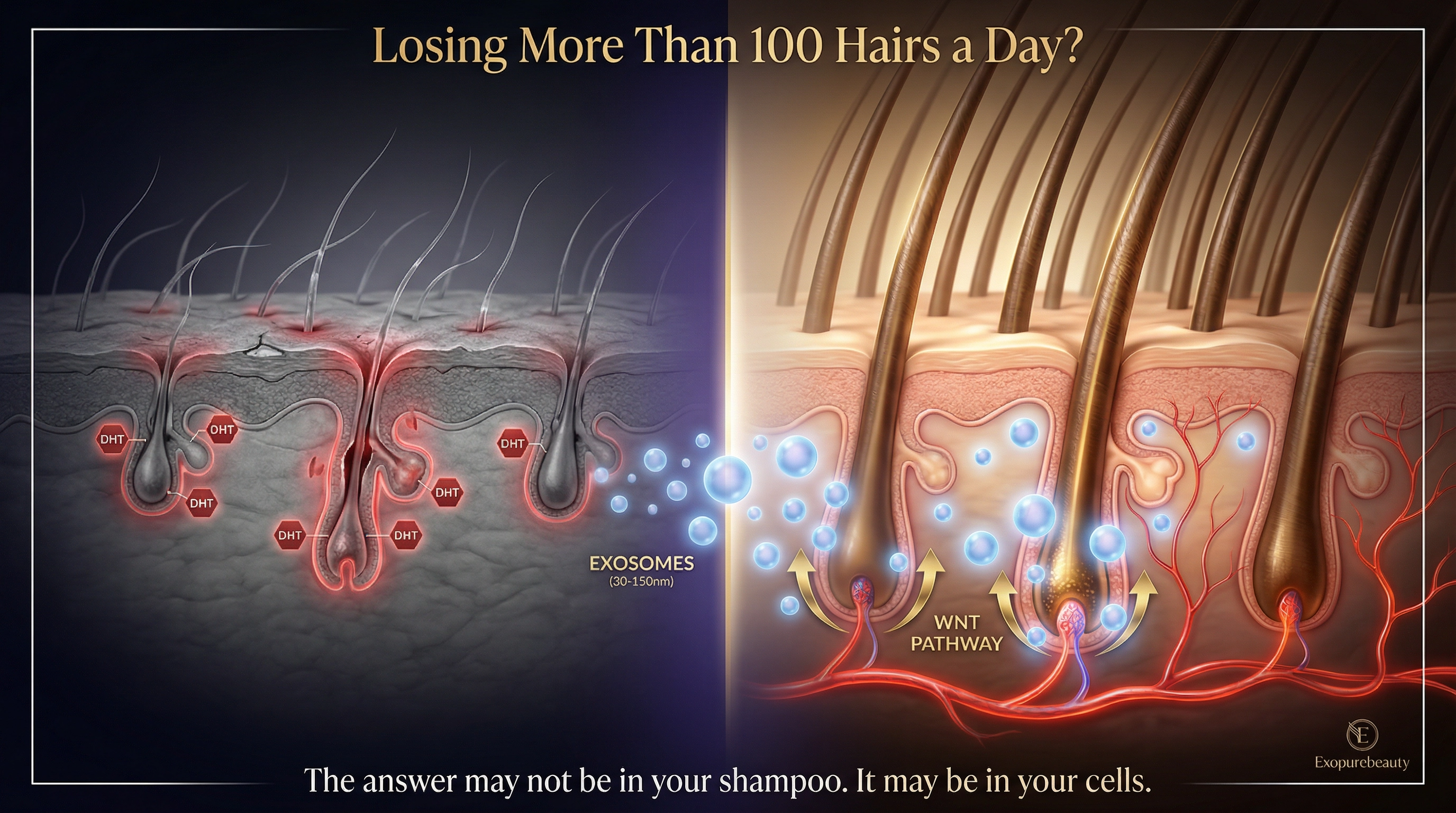
Losing more than 100 hairs a day? You may need more than just another shampoo.
By Exopurebeauty
Hair loss is one of those problems that can feel deeply personal, quietly frustrating, and surprisingly difficult to solve.
At first, it may seem minor. A little more shedding in the shower. More hair on the pillow. A part that looks slightly wider than it used to. A hairline that feels less certain than before.
Then one day, it no longer feels minor at all.
What makes hair loss so challenging is not just the visible change. It is the feeling that most solutions seem partial, temporary, or unsatisfying. Shampoos promise density. Supplements promise strength. Topicals promise regrowth. Procedures promise a reset. And yet for many people, the problem continues.
That is exactly why exosomes have become such an important point of interest in regenerative aesthetics and scalp science.
Because for the first time, there is growing attention on a possibility that feels fundamentally different:
not just managing hair loss from the outside, but supporting the follicle environment at the cellular level.
1. Hair Loss Is More Common Than Most People Realize
Hair loss is no longer something people associate only with middle age.
It is affecting younger adults more visibly, more widely, and more emotionally than ever before. Stress, hormonal changes, inflammation, scalp imbalance, genetics, aging, and lifestyle disruption all contribute to the problem—and often in combination, not isolation.
That is one reason hair loss can feel so difficult to treat. The visible symptom is simple: less hair. But the biology beneath it is not.
For many people, shedding is only the beginning. Over time, hair may become finer, weaker, slower-growing, and less resilient. The problem is not always that hair disappears all at once. Often, it gradually loses its vitality before it loses its presence.
That distinction matters.
Because if the real issue is the declining function of the follicle environment itself, then anything that works only at the surface may never be enough.
2. Why Traditional Hair Loss Solutions Often Fall Short
Before understanding why exosomes are attracting so much attention, it helps to understand the limits of the methods most people already know.
Minoxidil
Minoxidil works primarily by improving local blood flow and extending the growth phase of the hair cycle.
For some users, it can help. But it usually requires continuous use, and once it is stopped, shedding often returns. Some people also experience scalp irritation or unwanted hair growth in other areas.
Finasteride
Finasteride targets DHT-related hair loss and can be effective, particularly for androgenetic alopecia.
But it is not the right fit for everyone. Because it works through hormonal modulation, some users are understandably cautious about long-term use or side effects.
Hair Transplant Surgery
Transplants can be transformative in the right hands and for the right candidate. But they are expensive, invasive, and highly dependent on donor quality, surgical skill, healing response, and long-term maintenance.
They also relocate follicles. They do not necessarily restore follicle vitality across the scalp as a whole.
Anti-Hair Loss Shampoos
Most shampoos mainly improve the scalp environment at the cleansing level. They may reduce buildup, oiliness, or irritation, but they rarely deliver enough meaningful biological support to reverse follicle miniaturization on their own.
And that is the shared weakness behind so many conventional approaches:
they often work around the follicle, not deeply enough through it.
But the follicle is not just a passive structure. It is a miniature organ with its own regenerative rhythm. And at the center of that rhythm is something much more important than surface care alone:
the vitality of hair follicle stem cells and the microenvironment that supports them.

3. How Exosomes May Help Address Hair Loss at the Root
What makes exosomes so compelling in scalp and hair-loss conversations is that they are not merely ingredients. They are cell-derived signaling carriers.
That means they are associated with communication, regulation, and repair pathways that may matter deeply in the follicle environment.
1. Supporting Dormant Follicle Activity
Hair follicle stem cells naturally cycle between dormancy and activation.
When hair loss progresses, one of the biggest challenges is that follicles may stop functioning at full strength. Growth cycles shorten. Dormancy lengthens. New hair emerges thinner and weaker—or not at all.
Exosomes are especially interesting here because they are associated with signaling pathways that may help support follicular activity and encourage a more favorable environment for renewal.
In simple terms:
they are not just trying to stimulate the scalp superficially.
They may help support the biological conversation that tells follicles when and how to function well.
2. Helping Extend the Anagen Phase
Healthy hair spends years in the anagen, or active growth phase, before entering rest and shedding phases.
In many forms of hair loss, that growth phase shortens while the resting phase becomes longer. Over time, hair becomes finer, weaker, and less able to reach its full visible density.
Exosomes are of growing interest because they are associated with pathways that may help support a healthier growth cycle rhythm—giving hair more opportunity to grow stronger and longer before shedding.
3. Improving the Scalp Microenvironment
A healthy scalp is not just a clean scalp.
Inflammation, oxidative stress, excess sebum, and local hormonal imbalance can all contribute to a follicle environment that gradually becomes less supportive of strong hair growth.
Exosomes are increasingly discussed for their anti-inflammatory and regenerative potential, making them relevant not only for follicle signaling, but also for creating a scalp environment that is calmer, healthier, and more hospitable overall.
4. Supporting Blood Vessel Formation and Nutrient Delivery
Hair follicles rely on dense microvascular support to supply oxygen, energy, and nutrients to the dermal papilla and surrounding structures.
Exosome-associated signaling is also being explored for its relevance to vascular support pathways, which may help explain why scalp vitality and follicle performance can improve when the surrounding environment becomes better nourished.
 4. Why Exosomes Feel So Different in Hair Loss Care
Hair loss treatments often frustrate users for one simple reason:
they may reduce symptoms without changing the long-term trajectory.
Exosomes feel different because the conversation is no longer just about forcing hair to stay longer or covering the scalp more effectively. It is about helping the follicle environment become more capable, more balanced, and more regenerative.
That is a very different promise.
It is also why exosome-based scalp care has become so interesting for people who have already tried the obvious solutions and are looking for something more advanced, more biological, and more future-facing.
This is not about replacing every conventional method. In many cases, the best strategy may still be combination-based.
But exosomes change the level at which support begins.
And in regenerative care, that changes everything.
5. What the Research Direction and User Experience Suggest
Published clinical interest in exosomes for hair loss has been growing, especially in the context of androgenetic alopecia and regenerative scalp treatments.
Studies and clinical reports have explored the role of stem cell-derived exosomes in improving hair density, increasing shaft thickness, and supporting visible regrowth over the course of several weeks to months.
Just as importantly, user patterns tend to follow a recognizable timeline:
-
around 1 month: reduced shedding becomes noticeable
-
around 2–3 months: fine new hairs may begin to appear
-
around 4–6 months: improvements in visible density and overall stability become more established
That timeline matters because it sets the right expectation.
Exosome-based scalp care is not an overnight fix.
It is a biologically paced intervention.
And when the goal is healthier follicle behavior rather than short-lived cosmetic illusion, that is exactly what you would expect.
6. How Exosomes Can Be Used in a Hair Loss Routine
Microneedling Delivery to the Scalp
This is one of the most compelling approaches.
Microneedling creates controlled microchannels in the scalp, which may dramatically improve how well active ingredients interact with the follicle environment. When exosomes are used in this window, the potential for meaningful delivery becomes much stronger than with simple topical application alone.
This approach is often recommended as part of a structured series, with sessions spaced every few weeks.
Targeted Scalp Injection
For users with more localized thinning or more advanced hair loss, targeted injection into the scalp may offer a more precise method of delivery.
Because this requires professional technique and clinical judgment, it should be handled by an experienced practitioner.
Daily Exosome Scalp Care
Lower-intensity exosome scalp formulas may also play a role in maintenance care, prevention-focused routines, or recovery support between higher-intensity sessions.
This is especially useful for users who want a long-term scalp health strategy rather than only an occasional treatment cycle.
7. Matching the Right Strategy to the Right Type of Hair Loss
Not all hair loss behaves the same way, and not every user needs the same approach.
Early Androgenetic Hair Loss
Best approach: Microneedling plus exosome delivery, sometimes alongside conventional support
Expected outlook: Strongest response in earlier stages
Stress-Related or Postpartum Shedding
Best approach: Exosome scalp serum plus scalp recovery support
Expected outlook: Faster visible recovery once the shedding trigger begins resolving
Alopecia with Immune Involvement
Best approach: Underlying immune regulation first, with exosomes used as supportive scalp-environment care
Expected outlook: More variable, but relevant as part of a broader plan
Post-Transplant Maintenance
Best approach: Exosome-based scalp care as recovery and support maintenance
Expected outlook: Helpful for scalp recovery quality and overall support
Naturally Fine, Low-Density Hair
Best approach: Long-term exosome maintenance care
Expected outlook: Better hair quality and visual fullness support, though not a full structural reversal
This matters because good hair-loss care is not one-size-fits-all.
It is about understanding whether the goal is recovery, prevention, stabilization, support after procedures, or visible density improvement.
8. Final Thoughts
Hair loss is not just a cosmetic inconvenience.
For many people, it is a quiet biological crisis happening at the level of the follicle.
That is why surface-level solutions so often feel incomplete.
Exosomes matter because they shift the conversation closer to where the real problem lives:
the signaling environment, regenerative rhythm, and vitality of the follicle itself.
No technology is magic. And no serious approach should pretend otherwise.
The best outcomes still depend on consistency, lifestyle, stress management, nutrition, sleep, and the right overall care plan.
But for people who feel like they have tried everything—and still sense they have not truly addressed the root of the issue—exosomes may be one of the most important frontiers worth understanding.
Exopurebeauty believes every strand deserves better support at the source.
Read more

Discover real user-inspired stories of how exosome skincare helped improve dark spots, sensitive skin, wrinkles, acne scars, and hair thinning with a cellular-level approach.
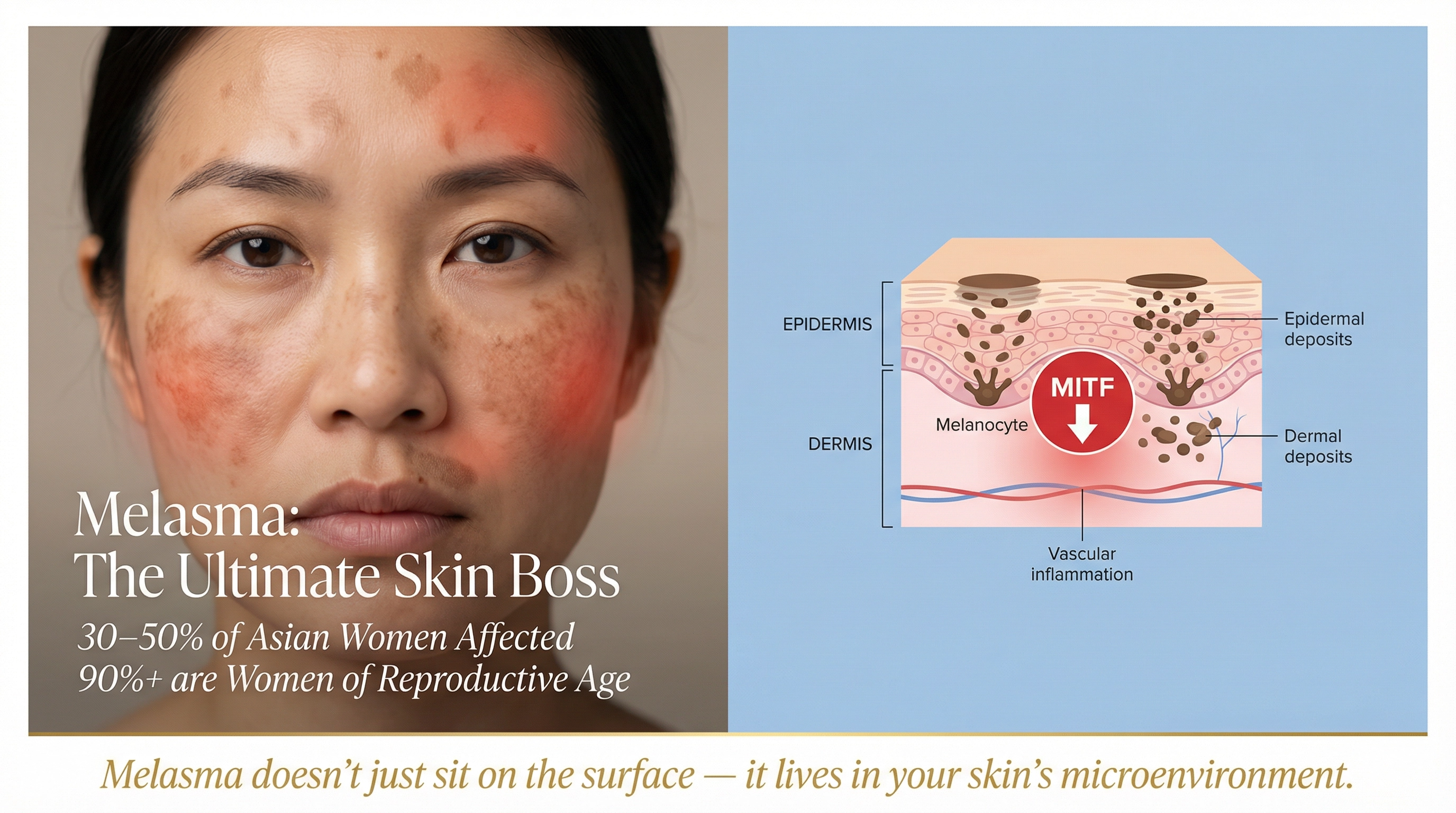
Discover how exosome technology may help support melasma-prone skin by calming inflammation, strengthening the barrier, and improving the look of uneven pigmentation over time.