

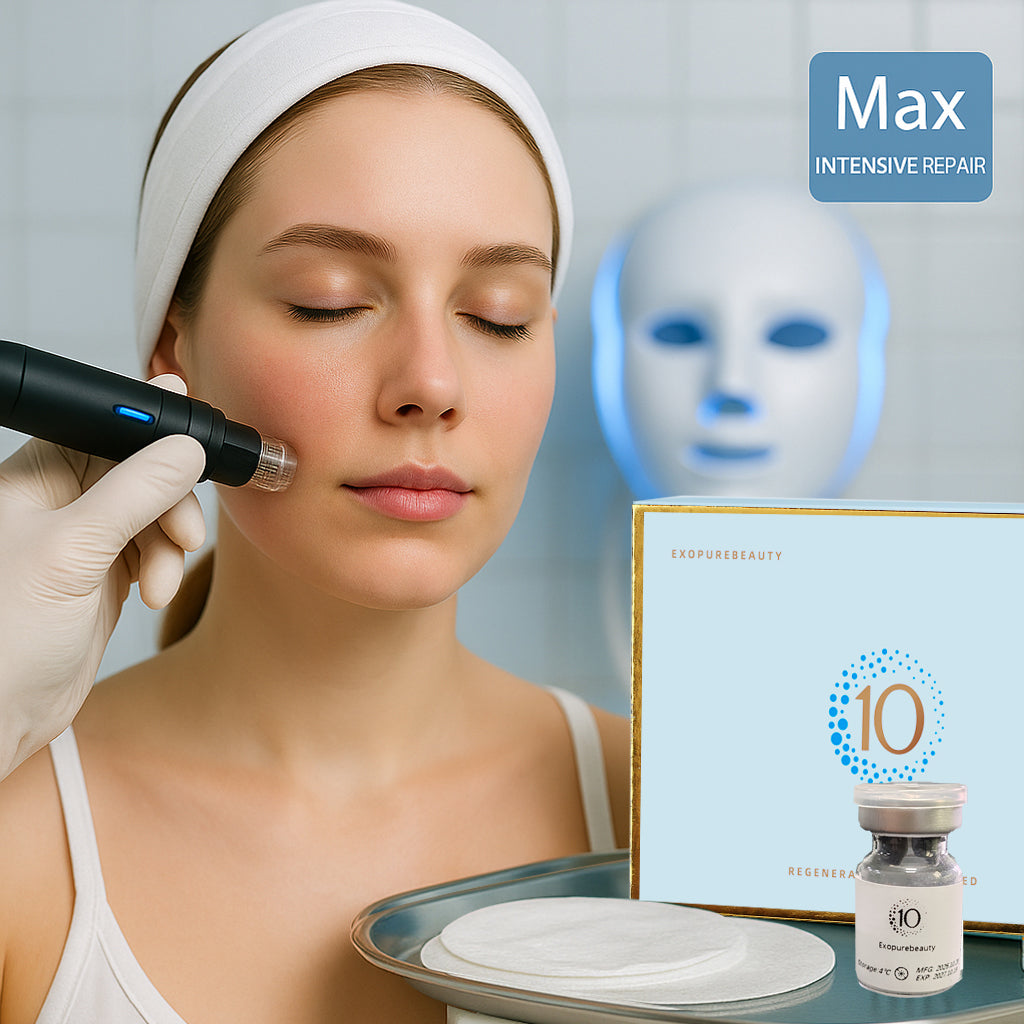
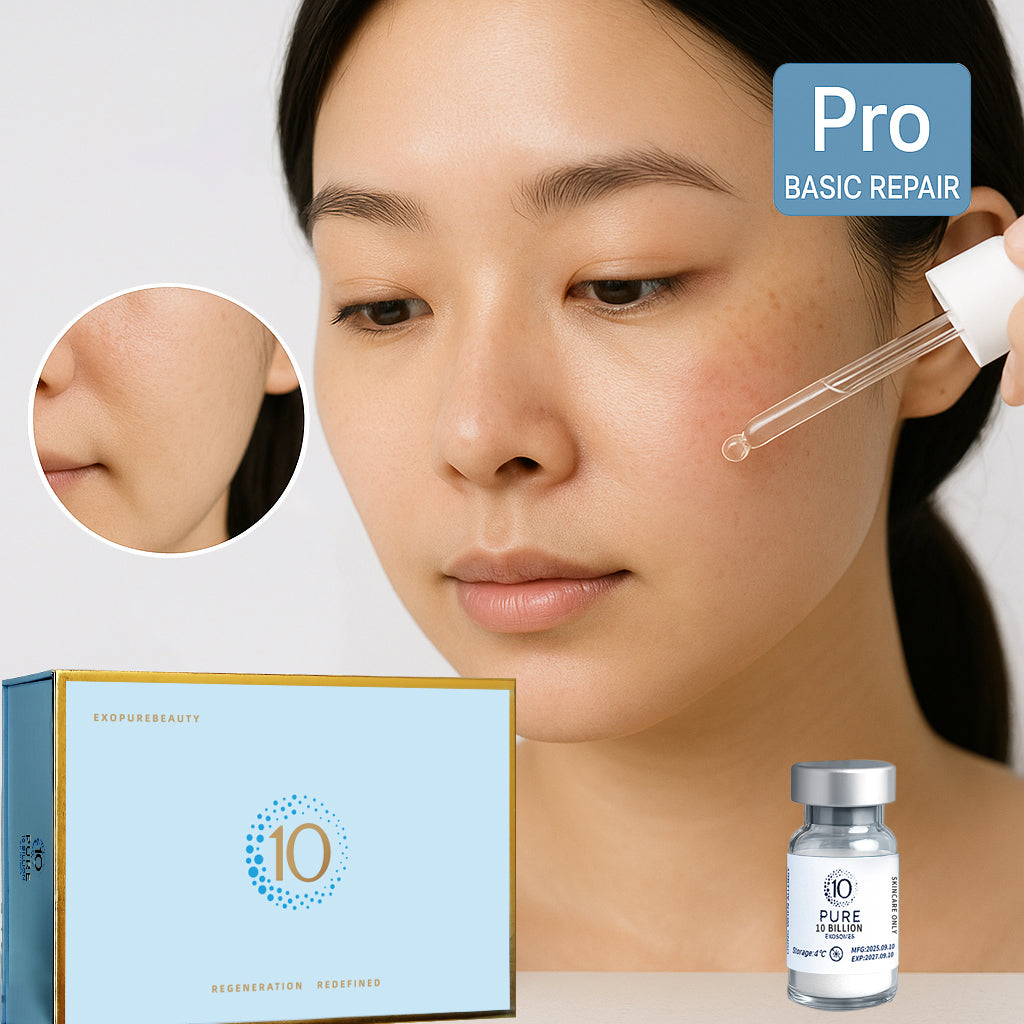


Exosomes for Acne Scar Repair: A Smarter Post-Laser Recovery Strategy
Why adding exosomes after fractional laser may dramatically change the way skin heals
By Exopurebeauty For anyone living with acne scars, the frustration is rarely just about texture.
It is about what those scars represent: old inflammation that never fully left, skin that healed imperfectly, and the feeling that no matter how much progress you make, the surface never looks completely smooth again.
That is why acne scar treatment has always demanded more than ordinary skincare. It has required devices, procedures, downtime, patience—and often, repeated disappointment.
But in recent years, one shift has started to stand out in both dermatology and advanced skin recovery:
the addition of exosomes to post-procedure repair.
Fractional laser may create the opening.
Exosomes may help improve what happens next.
And that is exactly why this combination is becoming one of the most important developments in modern acne scar repair.
1. What Acne Scars Really Are: A Structural Collapse in the Dermis
Acne scars are not just uneven skin.
What most people call “acne pits” are medically known as atrophic acne scars. They form when inflammation from acne damages the collagen structure within the dermis. Once the skin heals, it does not always rebuild that lost support evenly, leaving behind visible depressions in the skin.
There are three main types of atrophic acne scars, and each behaves differently.
Icepick Scars
These are narrow, deep scars that extend sharply into the skin, often less than 2 mm wide at the surface. They tend to be the most difficult to treat because the damage reaches deeply and the opening is so small.
Rolling Scars
These are broader, wave-like depressions with softer edges. They are often linked to fibrous bands pulling the skin downward beneath the surface.
Boxcar Scars
These are more sharply defined scars with clearer edges and a wider, more structured appearance. Their depth usually falls somewhere between rolling scars and icepick scars.
Different scar types respond differently to treatment. That is why acne scar repair is never just about choosing one procedure. It is about improving the skin’s ability to rebuild structure after controlled injury.
And this is where exosomes become so relevant.
2. Why Acne Scar Repair Is So Difficult in the First Place
The classic logic behind acne scar treatment is simple:
first disrupt, then rebuild.
That is why so many scar-focused treatments rely on technologies such as fractional laser, radiofrequency, or microneedling. These procedures create controlled micro-injury, which stimulates the skin’s wound-healing response and encourages new collagen formation in an attempt to fill and smooth depressed areas.
In theory, the approach makes sense.
In reality, there is one major limitation:
the skin’s ability to repair itself is not unlimited.
As skin ages—or after years of recurring acne, chronic inflammation, and cumulative sun exposure—the dermis simply does not regenerate as efficiently as it once did.
The same laser treatment performed on younger skin and older skin may not produce the same degree of improvement. The skin’s healing environment matters just as much as the treatment itself.
That is exactly why exosomes are attracting so much attention.
They do not replace laser.
They help support what laser is trying to trigger.
In other words, exosomes are not the treatment itself. They are the repair accelerator that may help make each treatment session more productive.
3. How Exosomes Help Accelerate Acne Scar Repair
1. They Support Collagen Renewal and Dermal Remodeling
One of the most important goals in acne scar recovery is rebuilding collagen architecture in the dermis.
Exosomes are especially interesting here because they are associated with signaling pathways that support fibroblast activity, collagen-related repair, and overall structural renewal. In a post-laser environment, that kind of support may help improve how effectively the skin uses its healing window.
For scar-prone skin, this matters enormously. It is not just about producing collagen. It is about producing better-organized structural support over time.
2. They Help Calm Inflammation and Shorten Visible Recovery Time
After laser treatment, inflammation is part of the process. Redness, heat, swelling, and temporary crusting are all normal signs that the skin is actively responding.
But prolonged inflammation can also mean more discomfort, longer downtime, and higher risk of post-inflammatory pigment issues.
Because exosomes are associated with immune-balancing and repair-focused signaling, they are increasingly valued for helping support a calmer recovery phase. This may translate into less visible post-treatment stress and a more comfortable healing experience.
3. They Support Faster Surface Recovery and Barrier Rebuilding
Once the skin is interrupted by ablative or semi-ablative procedures, the quality of barrier recovery becomes critical.
Exosomes are of growing interest in this area because they are linked to signaling pathways involved in skin regeneration and surface repair. A stronger, faster recovery process may help reduce the chance of setbacks and improve how well the skin tolerates a full treatment series.
4. They May Help Reduce the Risk of Post-Inflammatory Hyperpigmentation
This is especially important for skin more prone to pigment changes after procedures.
In many Asian skin types and melanin-rich complexions, post-inflammatory hyperpigmentation can become one of the most frustrating side effects of aggressive treatment. Exosome technology is particularly compelling because it is associated not only with repair, but also with a more balanced recovery environment overall.
That is one reason exosome-supported recovery is attracting so much interest in scar treatment for pigmentation-prone skin.
4. A Typical Treatment Roadmap: What a Combined Protocol May Look Like
Acne scar treatment is almost never one-and-done. Most users see the best outcomes through a structured series of treatments, with the exact plan determined by scar type, skin tone, recovery speed, and clinical evaluation.
A common framework may look something like this:
Sessions 1–2
-
Fractional laser or resurfacing treatment to open the repair pathway
-
Exosome delivery into the treatment zone
-
Calming light-based recovery support if needed
-
Typical interval: every 4–6 weeks
Sessions 3–5
-
Treatment settings adjusted based on recovery and response
-
Exosomes combined with broader repair support depending on the skin’s condition
-
Additional pigment-prevention support may be included when relevant
-
Typical interval: every 4–6 weeks
Maintenance Phase
Daily exosome serum as home care
-
Monthly microneedling maintenance if appropriate
-
Strict SPF 50+ sun protection
-
Ongoing barrier support and hydration
This kind of protocol reflects an important shift in modern scar recovery:
the treatment no longer ends when the device is turned off.
What happens afterward matters just as much.
5. What Results to Expect Based on Scar Type
Not all acne scars improve at the same speed, and not all respond equally.
Rolling Scars
These often show the most noticeable improvement, especially once underlying tethering is addressed and collagen remodeling begins. Among all acne scar types, they are usually the most responsive.
Boxcar Scars
These can improve visibly in edge softness and overall surface evenness, though results may be more moderate and require a more structured course of treatment.
Icepick Scars
These are the most difficult and typically need additional targeted strategies. Exosomes may still improve the overall quality of recovery, but deeper scar architecture often requires combination techniques.
Mixed Acne Scarring
Most real-world patients fall into this category. With staged treatment and consistent recovery support, overall appearance can improve significantly—even when no single scar type is treated identically.
That is an important point to communicate honestly:
the goal of acne scar treatment is usually not perfection.
It is meaningful visible improvement in texture, smoothness, and how the skin reads at normal social distance.
6. The Pattern Users Tend to Notice Over Time
One of the most encouraging things about acne scar treatment combined with exosome recovery is that progress often appears in layers.
After 1–2 sessions
The skin may look brighter overall. Scar edges can begin to soften. Makeup often sits more smoothly, rather than collecting in depressed areas.
After 3–4 sessions
Rolling scars may appear visibly shallower. Boxcar scars often begin looking less harsh at the edges. Overall surface texture may improve by a meaningful margin.
After 5–6 sessions
Mixed scar patterns usually begin to show stronger global improvement. Some rolling scars may come close to blending into the surrounding skin. At normal conversational distance, the difference can become especially noticeable.
Three to Six Months After the Series
Because collagen remodeling continues long after the final procedure, some of the best results may not appear immediately. The skin keeps rebuilding beneath the surface, and the final outcome may end up looking better than it did right when the last treatment ended.
That is why patience matters so much in scar recovery.
The skin is not changing only on the day of treatment.
It is changing in the weeks and months that follow.
7. What Every Acne Scar Patient Should Know Before Starting
Earlier Treatment Is Better
The longer scars remain untreated, the deeper and more established the dermal atrophy may become. Treating acne early—and controlling inflammation before scars fully mature—can reduce the long-term burden dramatically.
Consistency Matters More Than Intensity
Acne scar improvement usually requires a series, not a single dramatic intervention. For most users, meaningful change happens through 3–6+ treatments spaced over time.
Sun Protection Is Non-Negotiable
During any scar treatment program, broad-spectrum SPF 50+ is essential. Without it, the risk of post-inflammatory pigmentation rises significantly and may undermine the entire treatment plan.
Choose Quality and Traceability
Not all exosome products are equal. The source, processing quality, stability, and recovery protocol matter. This is not the category to treat casually.
Home Care Still Matters
A well-supported barrier heals better. Daily repair-focused care using ingredients such as ceramides, hyaluronic acid, and exosome-supportive recovery products helps create the best possible environment for long-term remodeling.
Final Thoughts
Acne scars are not just a surface issue.
They are the visible result of structural loss beneath the skin.
That is why the future of acne scar treatment is not only about stronger devices. It is about smarter healing.
Fractional laser can create the opportunity.
Exosomes may help the skin use that opportunity better.
And that shift—from injury alone to injury plus intelligent recovery—may be one of the most important upgrades in modern aesthetic repair.
At Exopurebeauty, exosome technology is part of a broader belief: every depression in the skin deserves a real chance to rebuild.
Read more

Discover why microneedling and exosomes work so well together to support deeper absorption, faster recovery, collagen renewal, and visibly improved skin texture.

Hair loss isn't just genetics—it's dormant follicles. Discover how exosome therapy uses growth factors to reawaken stem cells and naturally restore hair density.