





Exosome Hair Restoration: Reawakening Dormant Follicles
More hair in the drain than on your head? Discover how exosome therapy is revolutionizing hair restoration by restarting the biological growth cycle. 1. The Hair Loss Epidemic: More Than Just Genetics
In an era where appearance matters more than ever, your hair is essentially your second face. But the reality for many is distressing: more hair accumulating in the shower drain, handfuls of strands left on the brush, and a hairline that slowly but surely retreats into a distinct M-shape.
Don't panic. Today, we're exploring a rapidly emerging solution that is changing the landscape of dermatology and trichology: Exosome Hair Therapy.
2. What Exactly Is Exosome Hair Therapy?
Exosomes are nano-sized signal capsules secreted by cells. Don't let their microscopic size fool you—they are packed with a golden formula designed to promote cellular regeneration:
• Multiple Growth Factors (VEGF, FGF, etc.): To activate dormant follicle stem cells.
• miRNA: To regulate the hair growth cycle at the genetic level.
• Collagen Precursors: To strengthen the nutritional supply to the hair root.
Simply put, exosome therapy doesn't "plant" new hair. Instead, it sends powerful biological signals to awaken your existing hair follicles, prompting them to become active again.
3. How Do Exosomes Reverse Hair Loss?
3.1 Activate Follicle Stem Cells
Exosomes carry growth factors that directly awaken dormant follicle stem cells located in the bulge region. Once reactivated, these stem cells re-enter the anagen (active growth) phase, initiating the production of new hair strands.
3.2 Improve Scalp Microcirculation
Healthy hair needs a rich blood supply. Exosomes promote angiogenesis (the formation of new blood vessels) in the scalp, increasing blood perfusion to the hair follicles and ensuring they receive the nutrients required for sustained growth.
3.3 Anti-Inflammatory Scalp Repair
Chronic scalp inflammation is a silent killer of hair follicles. Exosomes suppress pro-inflammatory cytokines, creating a healthy, anti-inflammatory microenvironment that serves as the foundation for robust hair growth.
3.4 Extend the Anagen Growth Phase
By regulating the biological signals that control phase transitions, exosomes extend the anagen (growth) phase and delay the follicle's premature entry into the telogen (resting/shedding) phase. 4. Who Is the Ideal Candidate?
Exosome therapy is highly effective, but it requires living follicles to work.
✅ Best Candidates:
• Early to mid-stage Androgenetic Alopecia (Male/Female pattern baldness)
• Alopecia Areata (Patchy hair loss)
• Postpartum Telogen Effluvium
• Temporary hair loss caused by severe stress or sleep deprivation
❌ When It Has Limitations:
• Late-stage hair loss where follicles have completely atrophied and scarred over (these cases require a hair transplant, though exosomes can be used post-surgery to improve graft survival). 5. Powerful Combination Protocols
While exosome therapy is effective on its own, combining it with complementary treatments produces significantly superior results:
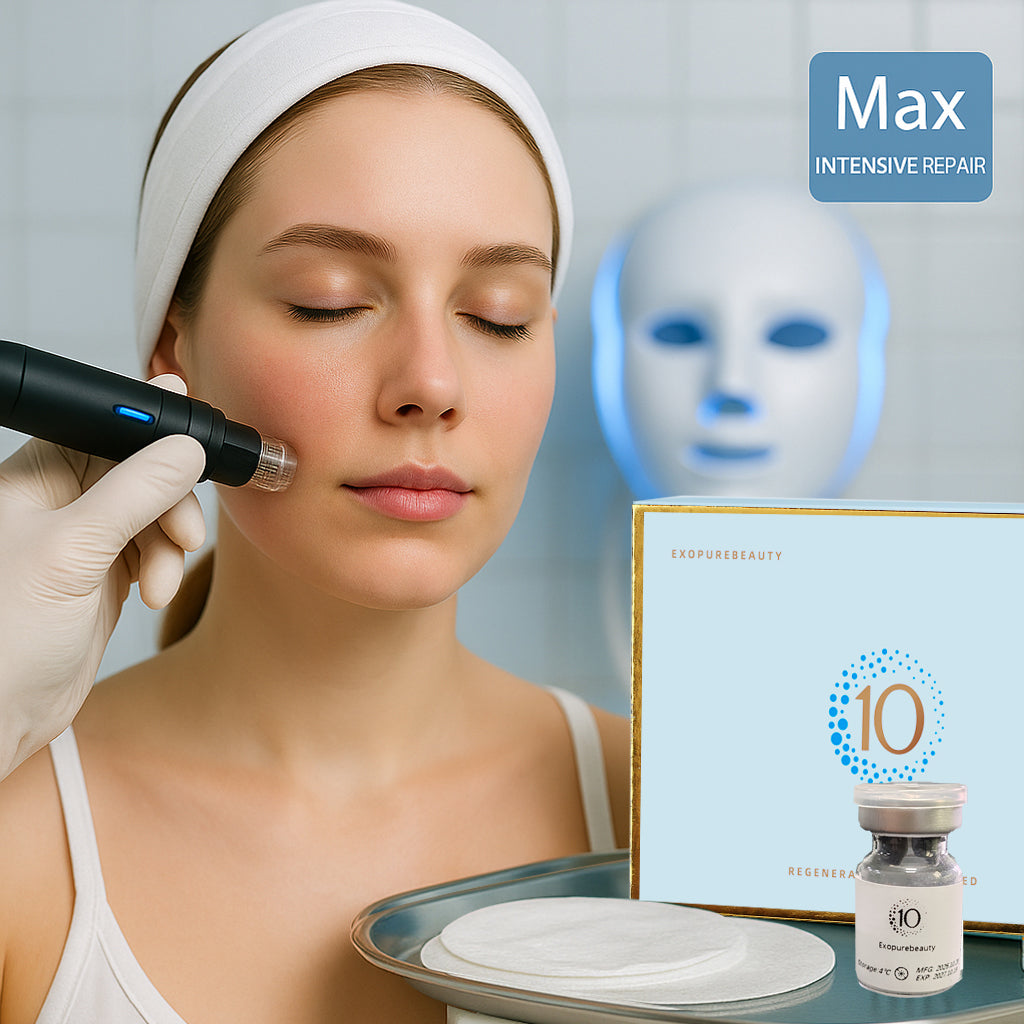
• Exosomes + Microneedling: Creates micro-channels for deep absorption while mechanically stimulating the scalp.
• Exosomes + Low-Level Laser Therapy (LLLT): Provides dual stimulation—biological signals from exosomes and cellular energy from the laser.
• Exosomes + Minoxidil: Integrates improved blood flow (minoxidil) with cellular regeneration (exosomes).
• Exosomes + Autologous PRP: Creates a highly personalized, ultra-potent growth factor cocktail.
6. Real Cases and the Recovery Timeline
Hair follicles need time to wake up. Consistency is the key to lasting results.
Real Patient Outcomes:
• Case 1 (Male, 32, Androgenetic Alopecia): After 3 sessions, visible density increased at the crown, and new short hairs emerged.
• Case 2 (Female, 28, Postpartum Hair Loss): After 4 sessions, shedding reduced from handfuls per wash to just a few strands.
• Case 3 (Male, 40, M-Shaped Hairline): After 6 sessions, fine vellus hairs appeared at the receded temples, and overall density improved.
The Expected Timeline:
• Weeks 2-4: Daily shedding decreases; scalp oil production normalizes.
• Months 1-2: Telogen shedding occurs (a positive sign of reactivation), and new short hairs begin to appear.
• Months 3-6: Measurable increase in density and clear visual improvement. 7. Crucial Advice Before You Start
⚠️ Choose a Reputable Institution:Ensure the exosomes are derived from a high-quality source (Umbilical Cord Mesenchymal Stem Cells are the gold standard).
⚠️Optimize Your Lifestyle:Minimize late nights and avoid harsh chemical processing (perming/dyeing) during your treatment course.
⚠️Plan for Maintenance:Androgenetic alopecia is a chronic condition. Initial treatments achieve the result; periodic maintenance preserves it.
⚠️Consult a Professional: For severe hair loss, always see a dermatologist first for trichoscopy to confirm your exact diagnosis. Final Thoughts
Hair loss is not the end of the story, and giving up is the only true failure. Exosome hair therapy isn't magic, but it is one of the most scientifically validated advancements in modern trichology. It gives your follicles a genuine chance to restart.
Remember: Every hair deserves to be taken seriously.
Exopurebeauty · Exosome Science · Regeneration Redefined
Read more

Discover how exosomes may help improve acne scar recovery after fractional laser by supporting collagen renewal, calming inflammation, and strengthening skin repair.

Discover real user-inspired stories of how exosome skincare helped improve dark spots, sensitive skin, wrinkles, acne scars, and hair thinning with a cellular-level approach.